The Local's Guide to Kayaking Northern Michigan: From Lazy Paddles to Wild Rivers
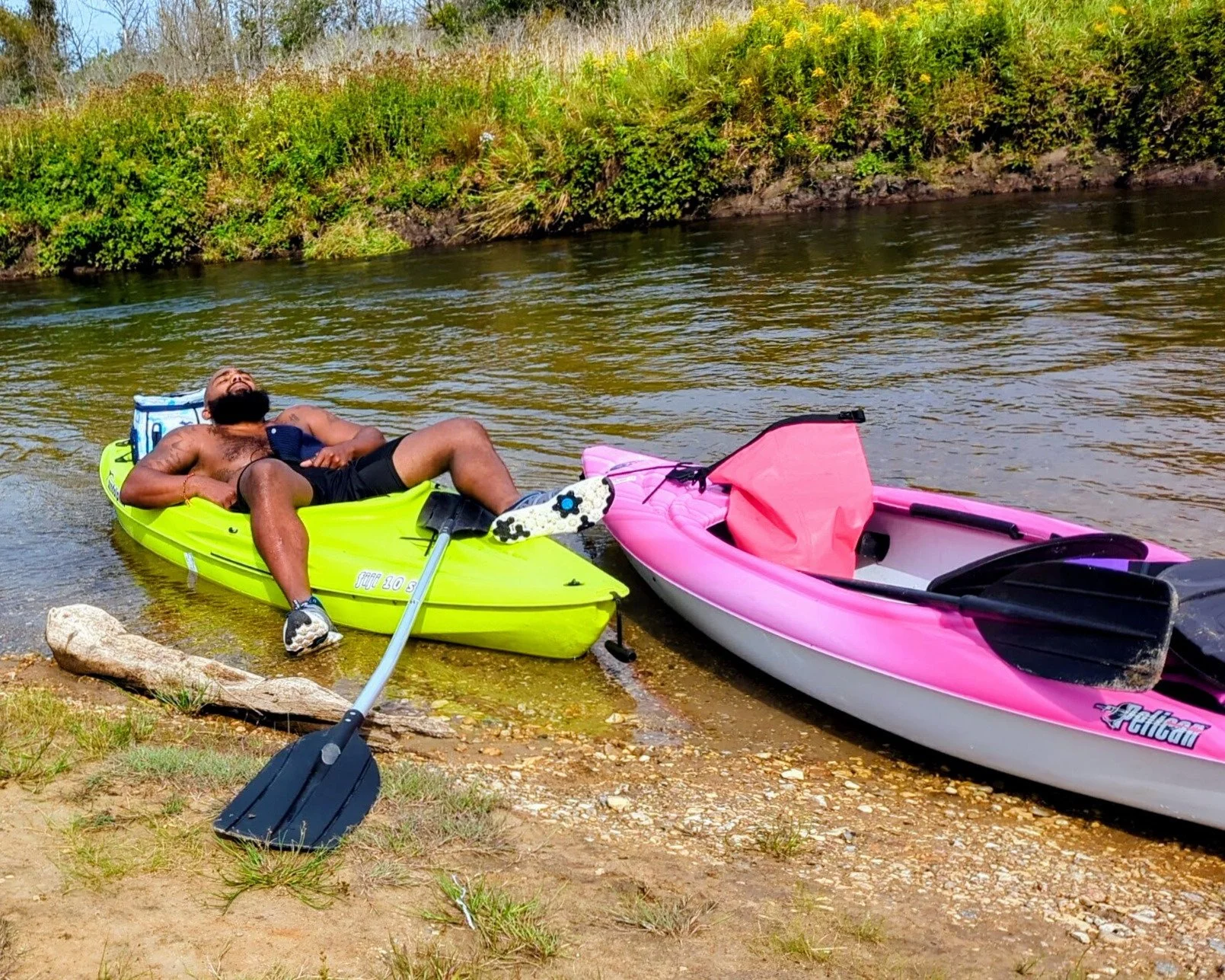
A kayaker taking a relaxing nap in a bright yellow kayak on a peaceful Northern Michigan riverbank the perfect definition of a lazy paddle day up north.
If you have lived up here for any stretch of time, you know that the water is half the reason people never leave. Rivers clear enough to count the pebbles on the bottom, lakes that stay cold well into July, and stretches of shoreline that feel like nobody has paddled them before even though people have been floating through these woods for centuries. Northern Michigan has more paddling than most people realize, and it runs the full spectrum from "your five-year-old can handle this" all the way to "do not attempt this unless you really know what you are doing."
This guide runs from the easy stuff to the serious stuff. Whether you are renting a kayak for the first time or you have been paddling for years and want something with a little more teeth to it, there is something on this list for you.
THE EASY END: FLATWATER, GENTLE CURRENTS, PERFECT FOR FIRST-TIMERS
First person paddler view from an orange kayak on the peaceful tree-lined Boyne River in Northern Michigan on a beautiful summer day.
Crystal River, Glen Arbor
This one is where you start. The Crystal River runs about two and a half miles from Fisher Lake to Glen Lake near Glen Arbor, inside Sleeping Bear Dunes National Lakeshore, and it is about as beginner friendly as a river gets. The water is shallow, slow, and so clear you can see every grain of sand beneath your hull. The whole trip takes two to three hours and winds through hardwood forest and open meadow with blue herons working the shallows and the occasional otter slipping under the surface if you are quiet enough.
Crystal River Outfitters in Glen Arbor has been running rentals for over twenty years. They offer kayaks, canoes, and they can handle kids. Parking is available at the put-in, and Glen Arbor has restaurants, shops, and ice cream within walking distance if you want to make a full afternoon of it. This river is not navigable in winter and is best paddled from late May through early October. Midsummer weekends get busy, so if you want the river to yourself, go on a Tuesday morning.
Platte River, Sleeping Bear Dunes
Just a few miles from the Crystal River, the Platte River flows through the southern part of Sleeping Bear Dunes National Lakeshore and empties right into Lake Michigan at Platte Bay. It is cold, spring-fed, and almost entirely flat. The trip from Livesey Road down to the lake takes about two hours. You will pass through cedar forest, open sandbars, and a stretch where the dunes roll up on the horizon ahead of you and the water goes from river to open lake in a matter of steps.
Several outfitters operate near Honor and Empire, including Riverside Canoes, which rents kayaks, canoes, and tubes. There is a campground at Platte River Campground inside the national lakeshore, and the National Park Service manages parking at the put-in. Best season is late May through September. The end of the trip puts you on a Lake Michigan beach, which is as good a reason as any to pack a lunch.
Elk River, Elk Rapids
The Elk River is short, maybe a mile from Elk Lake to Lake Michigan, but it earns its spot on this list because of the clarity of the water and the easy access. This is a good warm-up paddle for families, or a quick add-on if you are already in the Elk Rapids area, which is a great little town worth stopping in anyway. The river flows from Elk Lake through the village and out to the bay. It is calm, wide, and manageable for almost anyone. There are no dedicated outfitters specifically on the Elk River, but kayak rentals are available seasonally in town. If you want to extend the trip, you can access the Chain of Lakes system, which connects Elk Lake to Torch Lake, Clam Lake, Lake Bellaire, and others for multi-day flatwater touring.
Boyne River, Boyne City
The Boyne River runs from Boyne Falls down to Lake Charlevoix at Boyne City, and it is a genuinely pleasant beginner float. Boyne River Adventures operates out of Boyne City and runs trips on the river from a put-in on Dam Road with shuttle service down to Old City Park. The water is gentle, the scenery is classic Northern Michigan hardwood, and the trip takes about two hours. Lake Charlevoix itself is worth paddling if you want a flatwater day on one of the most beautiful inland lakes in the state. Boyne Watersports offers kayak rentals on the lake right from downtown Boyne City.
Deer Lake and Lake Louise
For true flatwater paddling with no current to manage, Deer Lake in Benzie County and Lake Louise near Atlanta in Montmorency County are both worth mentioning. These are peaceful, uncrowded lakes with clean water and good wildlife viewing. Bring your own gear or rent locally from outfitters in the surrounding areas. These are ideal for people who want to be on the water without any whitewater stress, and they work well as base camps for longer trips on nearby rivers.
THE MIDDLE GROUND: MOVING WATER WITH SOME CHARACTER
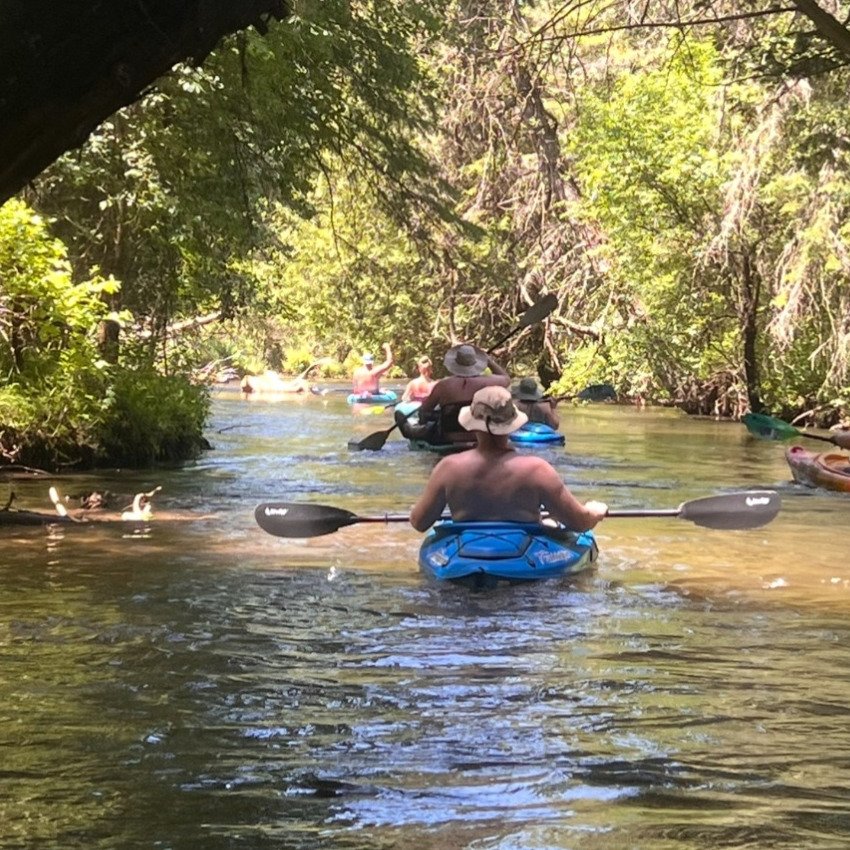
Kayakers enjoying the peaceful moving waters of one of Northern Michigan's most scenic river paddles exactly what "moving water with character" looks like up north!
Boardman River, Traverse City Area
The Boardman runs from near Kalkaska all the way through Traverse City and into West Grand Traverse Bay, and different sections of it feel like completely different rivers. The upper stretches above Scheck's Place Campground are narrow, technical, and shaded by cedar so thick that it feels like a tunnel in midsummer. The lower section below Brown Bridge Pond is wider and more forgiving, and it is where most casual paddlers spend their time. The full run from Scheck's Place to Traverse City is about eighteen miles and can be done in a day or broken into two.
Rentals are available through several outfitters in the Traverse City area. There are multiple access points and campgrounds along the river, and the lower section terminates close enough to downtown TC that you can walk to dinner afterward. The Boardman is paddleable most of the year, though spring runoff makes it faster and higher. Summer is the most popular season, and fall color along this river is genuinely something to see.
Au Sable River, Grayling Area
The Au Sable is Michigan's most famous river, and it deserves the reputation. It has been a paddling and fly fishing destination since before most people in this state were born, and the stretch from Grayling downstream through Mio and beyond offers some of the most consistent and beautiful flatwater paddling in the Lower Peninsula. The river is spring-fed, cold, clear, and runs through stands of white pine that make you feel like you are somewhere much more remote than you actually are.
Trip lengths are flexible. A one-day float from Grayling to Wakeley Bridge covers about fourteen miles. Longer trips can run multiple days with access to state forest campgrounds along the way. Outfitters in Grayling rent canoes, kayaks, and tubes. The famous Au Sable River Canoe Marathon happens every July, and if you have never seen it, it is worth staying up for. The river is best paddled from May through October. It is not typically navigated in winter, though die-hard anglers know it year-round.
Betsie River, Benzie County
The Betsie gets overlooked because it sits between the better-known Platte and Manistee, but it is a solid intermediate paddle with a steady current and enough bends to keep you working. It flows from near Thompsonville down to Frankfort and Lake Michigan, and the full run is about thirty miles. Most people do sections of eight to twelve miles.
Rentals with camping right on the water are available along the river, which means you can combine a two-day river trip with a night under the pines without having to drive anywhere in between. The river has overhanging trees and tight corners, so beginners should pay attention. It is not technically difficult, but it will put you into a tree if you stop paddling and look at your phone. Summer and early fall are best. Frankfort at the end is a great little town to clean up and eat well.
Jordan River, East Jordan and Antrim County
The Jordan River is one of the most beautiful rivers in Michigan, full stop. It flows cold and clear through the Jordan River Valley, which is also one of the best hiking areas in the northern Lower Peninsula, and the combination of the water, the forest, and the river bluffs makes it feel genuinely wild even though it is accessible. It is a designated Wild and Scenic River, which means development along its banks is restricted and it has stayed in remarkable shape.
Jordan Valley Outfitters in East Jordan runs canoe, kayak, and raft trips year-round, which is notable. They do summer family paddles and winter adventures on the river, and the winter trips on an empty, cold Jordan River are about as Northern Michigan as it gets. Typical summer trips run two to three hours, but the longer eight-mile Graves Crossing route requires real paddling ability. The river narrows in sections, falls over root mats, and has overhanging brush that demands attention. There is a state forest campground near Graves Crossing. Best season is May through October, though serious paddlers go anytime.
Manistee River, Manistee National Forest
The Manistee is a big river, a real one, and it offers multi-day paddling opportunities that not many Northern Michigan rivers can match. It runs from near Gaylord all the way to Manistee and Lake Michigan, passing through the Manistee National Forest for much of its length. The water moves well, the scenery is consistent pine and hardwood forest, and there are numerous access points, campgrounds, and outfitters along the way.
Trip lengths range from a few hours to multiple days. The Manistee is generally considered intermediate, with sections that move fast but no serious technical challenges for competent paddlers. Spring brings higher water and stronger current. This river is best from late spring through early fall.
Pigeon River, Pigeon River Country State Forest
The Pigeon River drains one of the most special pieces of land in Michigan. Pigeon River Country State Forest northeast of Vanderbilt is where Michigan's elk herd lives, and paddling the Pigeon means you are floating through the heart of it. Elk country, old-growth hemlock, the quiet of a river that does not get as much traffic as the bigger names.
The river is designated as a Wild and Scenic River, and it is classified as intermediate to advanced in some sections because log jams, brush piles, and portages come up without much warning. Paddlers need to be alert and physically capable of getting out and dragging a boat over an obstacle. Camping is available near the river, and a nearby campground offers full services with canoe, kayak, and tube rentals, shuttle service, and an on-site store. Best season is May through September. This is not a winter paddle.
THE SERIOUS END: KNOW WHAT YOU ARE DOING BEFORE YOU PUT IN
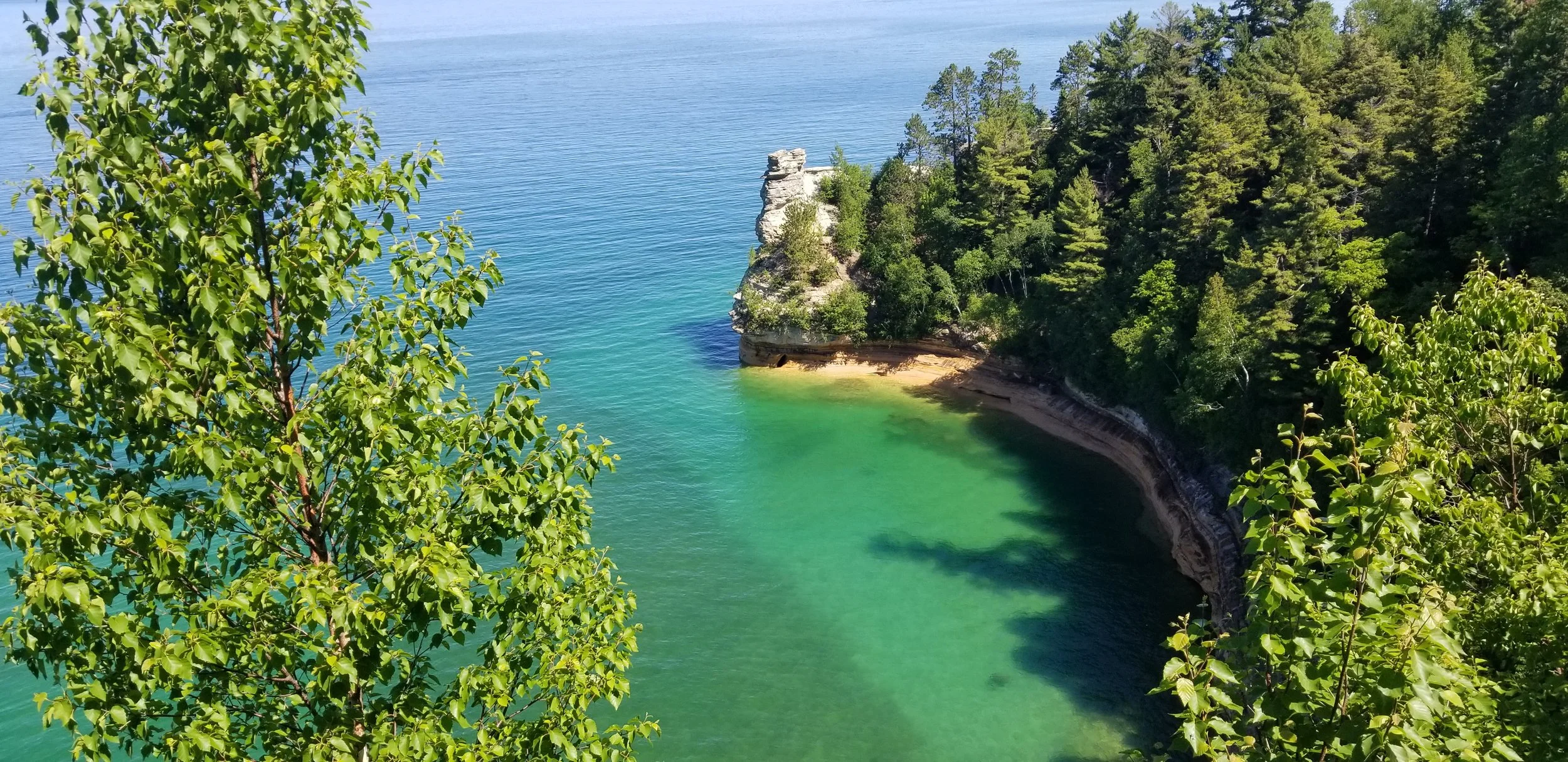
Stunning aerial view of Miners Castle rock formation at Pictured Rocks National Lakeshore with crystal clear turquoise Lake Superior waters in Michigan's Upper Peninsula.
Sturgeon River, Cheboygan County
The Sturgeon River in the Lower Peninsula drops about fourteen feet per mile and the fastest-flowing river in the Mitten. The spring-fed water rises near Gaylord and runs down to Burt Lake, and the character of the river changes significantly as you move downstream. The upper portion is more forgiving and makes for a great intermediate float. The lower section is a different story, with continuous riffles, chutes, and standing waves up to two and a half feet in normal water levels.
Outfitters in Wolverine and Indian River rent kayaks, canoes, rafts, and tubes with shuttle service. If you want Northern Michigan whitewater without going to the Upper Peninsula, this is where you come. Summer and early fall are best. The river is navigable in winter but not recommended without experience in cold-water self-rescue.
Pine River, Manistee County
The Pine River has the fastest moving water in the Lower Peninsula and earns a genuine caution. This is not a river for beginners or people who have paddled only flatwater. The narrow channel, frequent sweepers, sharp bends, and fast current demand constant attention and competent paddling skills. After a heavy rain, the Pine is genuinely dangerous.
That said, experienced paddlers love it here. The scenery is excellent, the forest feels remote, and the river has enough variety to stay interesting for its full length. Multiple outfitters operate on the Pine and several have campgrounds, camp stores, and full camping setups including equipment rentals for people doing overnight trips. Best season is May through August. Avoid the Pine in high water if you are not very experienced.
Two Hearted River, Upper Peninsula
You cannot write about Michigan paddling without mentioning the Two Hearted River. Hemingway wrote about it, which means people have been romanticizing this stretch of water for a long time, and it mostly delivers. The river drains a large wilderness area in the eastern Upper Peninsula near Paradise and flows into Lake Superior. The water is dark with tannins from the cedar forests, the current is steady, and the trip through old-growth pines with Lake Superior waiting at the end is hard to beat.
This is intermediate paddling with some sections that require reading the water carefully. It is remote, which means if something goes wrong you are not near help. Camping is available near the mouth of the river. There are no major outfitters right on the river, so most people bring their own gear or rent in the surrounding area. Best season is late June through September. The river is not navigated in winter by most paddlers.
Pictured Rocks National Lakeshore, Lake Superior
Pictured Rocks is sea kayaking, not river paddling, and the distinction matters. Lake Superior does not care how experienced you are. The lake is cold enough to incapacitate a person quickly after capsizing, the weather changes fast, and the exposed cliffs and rock formations that make this one of the most photographed places in the Midwest offer no shelter if conditions deteriorate. That said, on a calm morning in July when the light hits those sandstone cliffs and the water goes translucent green over the shallow ledges, there is nowhere else like it.
Experienced sea kayakers paddle the forty-two miles of shoreline from Munising to Grand Marais, camping on beaches along the way. Novice paddlers can join guided tours out of Munising. You should not attempt this independently without sea kayaking experience, a wetsuit or drysuit, and solid self-rescue skills. Best season is July through August when Lake Superior is most stable. This is not a winter destination.
Isle Royale National Park, Lake Superior
Isle Royale is remote, wilderness sea kayaking in some of the most spectacular and demanding conditions in the Midwest. The island sits in the northwest corner of Lake Superior, accessible only by ferry or floatplane, and it has no roads. Paddling around the island or between the island archipelago chains requires experience with open-water conditions, self-sufficient camping, and the ability to make sound decisions about weather and risk. Lake Superior can hold paddlers on the island for days if a storm rolls in.
The rewards are proportional to the commitment. Isle Royale has moose, wolves, loons, pristine lakes, and a complete absence of crowds outside of a few popular campgrounds. The National Park Service manages camping on the island, and reservations are required. The ferry season runs roughly from late May through early October. This is a trip that takes real planning, real gear, and real honesty about your skill level. If you are serious about doing Isle Royale or a multi-day Pictured Rocks route and want help mapping out the logistics before you commit, reach out. Getting the timing, gear list, and access points dialed in ahead of time makes a real difference on a trip like this.
A FEW QUICK NOTES ON SEASONALITY AND WINTER PADDLING
Most of the rivers on this list are best from late May through early October. Spring runoff in April and early May makes many rivers faster and more technical than their summer character would suggest, which can be a feature or a problem depending on your skill level. Fall color, particularly in September and October, turns these rivers into something spectacular, and the crowds are gone. Water temperatures drop quickly after September, and paddlers should plan accordingly.
Winter paddling happens on the Jordan and the Au Sable and a few other spring-fed rivers among people who dress for immersion and know what they are getting into. It is cold, it is quiet, and it is a genuinely different experience from summer paddling. But cold-water immersion is serious, and you should not attempt winter paddling without a drysuit or a heavy wetsuit and a partner who knows what to do if you end up in the water.
ONE MORE WORTH KNOWING
The Inland Waterway is worth mentioning for anyone interested in multi-day flatwater touring. It connects Crooked Lake, Crooked River, Pickerel Lake, Burt Lake, Indian River, Mullett Lake, and the Cheboygan River all the way to Lake Huron. The full route covers about forty miles of connected lakes and rivers and can be paddled in two to four days with camping along the way. It is calm, historic, and one of the best-kept secrets in Northern Michigan paddling.
Get out there. The water is waiting.
WANT SOMEONE TO PLAN IT FOR YOU?
Northern Michigan has a lot of paddling, and figuring out which rivers fit your skill level, what time of year to go, where to camp, and how to string it all into a trip that actually works takes more homework than most people want to do on vacation. That is exactly what I help with.
Whether you want a single afternoon on the Crystal River or a four-day itinerary that hits multiple rivers with camping and meals planned in between, I can put it together for you. I live here, I know these rivers, and I know the difference between a good recommendation and one that sounds good on paper but falls apart on the water.
If you want a custom kayaking itinerary for your Northern Michigan trip, head over to my services page and let me know what you are looking for.